Why Denver Landscape Solutions Are Trick to a Magnificent Building
A great Denver yard has to do more than look good for a few weeks in June. It has to handle chinook winds, clay soil, sudden hail, dry stretches, heavy spring snow, bright high-altitude sun, and watering rules that can shift depending on the season. That is a lot to ask from turf, trees, shrubs, patios, irrigation, and drainage. It is also why landscaper Denver professional Denver landscape services can make such a noticeable difference in how a property looks, feels, and holds its value over time.
I have seen plenty of Colorado yards that looked promising on paper and struggled in real life. A homeowner falls in love with a plant at a nursery, puts it in the wrong exposure, waters it like a Midwest garden, then watches it crisp up by August. Someone installs sod over compacted clay without proper soil prep, and within two seasons the lawn is patchy, lumpy, and thirsty. A patio gets built without enough thought to drainage, then the first big thunderstorm sends muddy water toward the foundation. These are not rare mistakes. They are normal problems when landscaping Denver properties without a plan shaped by local conditions.
Good landscaping is not just decoration. It is a working system. When it is designed and maintained well, the front yard frames the home, the backyard becomes easier to use, water moves where it should, trees get the space they need, and the whole property feels settled. That is the quiet value of experienced Denver landscape contractors. They see the site as a whole instead of a collection of weekend projects.
Denver is beautiful, but it is not an easy place to landscape
Colorado landscaping has its own personality. The Front Range gives us dramatic skies, clean light, mountain views, and four distinct seasons, sometimes within the same week. It also gives us soil that can test anyone’s patience.
Much of the Denver metro area has heavy clay soil. Clay can hold nutrients, which is useful, but it compacts easily and drains slowly. When it dries out, it can become hard enough to make hand digging miserable. When it gets wet, it can turn sticky and oxygen-poor around plant roots. A landscape design that ignores clay soil often fails gradually. Plants may survive the first year because they were pampered during installation, then decline once real weather and normal watering take over.
Then there is the sun. Denver sits at elevation, and the sunlight can be intense. A plant tag that says “full sun” in another part of the country does not always mean full afternoon sun against a south-facing Denver wall. Reflected heat from stucco, concrete, rock mulch, and fences can create little heat traps where delicate plants struggle. On the other hand, north-facing areas may stay colder and shadier much longer into spring, especially around mature trees or tall buildings.
Water is the other big piece. Denver homeowners are more water-conscious than they used to be, partly because they have to be and partly because it is simply the right way to manage a landscape here. A stunning property is not necessarily one with the greenest lawn on the block. Often, it is the one that balances lawn where it is useful, drought-tolerant planting where it makes sense, and irrigation that delivers water efficiently instead of spraying sidewalks at 5 a.m.
This is where seasoned landscape companies Denver homeowners trust earn their keep. They know which plants survive here, where turf is worth keeping, how to amend soil without overdoing it, and when a drainage problem needs more than a bag of mulch and crossed fingers.
Curb appeal starts with structure, not flowers
Flowers get attention, but structure carries a landscape. If you strip away the blooms, does the yard still have shape? Does the walkway invite people to the front door? Do the trees and shrubs fit the scale of the house? Are there clean bed lines, sensible transitions, and open sightlines?
The best Denver landscaping usually begins with these questions. A front yard can have beautiful annuals and still feel messy if the beds are oddly shaped or the shrubs are fighting the architecture. A backyard can have expensive materials and still feel awkward if the patio is too small for a table or if the grill sits twenty steps from the kitchen door.
Landscape structure comes from grading, hardscaping, plant placement, edges, views, and circulation. In plain English, it is how people move through the space and how the space holds together. A good landscaper Denver homeowners can rely on will think about where snow gets shoveled, where kids cut across the lawn, where the dog runs, where afternoon shade falls, and where guests naturally gather.
I once walked a property where the owner wanted to replace the front lawn with a low-water design. The existing yard had a narrow concrete path from the sidewalk to the porch, but nobody used it. Visitors walked diagonally across the grass because the path did not line up with the street parking. The smartest first move was not choosing plants. It was changing the approach. Once the walkway felt natural, the planting beds made sense around it. That small design shift did more for curb appeal than any single shrub could have done.
The case for professional planning before installation
A lot of homeowners call for Denver landscaping services when they are ready to build. That is understandable. They have saved photos, they know they want a patio or new beds or a cleaner front yard, and they want to get going. But planning is where money is either protected or wasted.
A professional plan does not have to be overly formal for every project. Not every yard needs a full-scale master plan with renderings and a thick packet of specifications. Sometimes a careful walkthrough, rough concept, plant list, irrigation notes, and phased installation plan are enough. The point is to make decisions in the right order.
Drainage should come before decorative rock. Soil preparation should Denver landscaping come before plants. Irrigation layout should come before sod. Patio size should be decided before furniture arrives. Tree placement should account for mature canopy spread, not the size of the young tree in the container.
Skipping that thinking can get expensive. Moving a boulder after installation costs more than placing it correctly the first time. Reworking irrigation after planting is frustrating. Replacing dead shrubs every spring because they were poorly matched to the site is the kind of expense that sneaks up on people.
Professional Denver landscape contractors tend to see those problems early. They also understand phasing. Many homeowners do not want to redo an entire property at once, and that is perfectly reasonable. A good contractor can help decide what should happen now and what can wait. For example, grading and main irrigation lines may need to be handled before a future patio project, while ornamental planting in a side bed can wait another season.
Plants that belong here perform better here
There is no single “Denver plant palette,” and that is a good thing. A modern home in Sloan’s Lake may call for a different look than a brick bungalow in Park Hill or a larger property near the foothills. Still, successful landscaping Denver properties usually depends on plants that can tolerate local realities.
Native and regionally adapted plants often have an advantage. That does not mean every yard has to look wild or sparse. It means using plants with a fighting chance. Serviceberry, rabbitbrush, blue grama grass, penstemon, yarrow, Russian sage, ornamental grasses, pine, juniper, oak varieties suited to the region, and many tough perennials can play a role depending on the site. There are also plenty of non-native plants that do well here when placed correctly.
The trick is matching the plant to the microclimate. A hot, exposed hell strip between sidewalk and street is not the same as a protected east-facing foundation bed. A shrub near a downspout has different water access than one under a roof overhang. A lawn bordered by mature trees has root competition that does not show up on a simple sun chart.
Plant spacing matters too. New landscapes often look sparse at first when they are planted correctly. That can make homeowners nervous, especially after spending good money. But crowding plants for instant fullness creates maintenance headaches later. Shrubs grow into walkways, perennials smother each other, airflow drops, and pruning turns into a constant battle. Experienced teams, including a Denver AAA landscaping company or other reputable providers, should be comfortable explaining what a landscape will look like at installation, in year two, and in year five.
Hardscaping is where precision really shows
Patios, retaining walls, walkways, steps, edging, fire pit areas, and outdoor kitchens bring function to a yard. They also reveal the difference between casual labor and skilled landscape construction. A plant can be moved if it is unhappy. A poorly built patio is another story.
Denver’s freeze-thaw cycles are tough on hardscapes. Water gets into joints or under base material, freezes, expands, and starts shifting surfaces. Poor base prep may not show in the first month, but it often shows after a winter or two. Pavers settle. Edges spread. Steps become uneven. Drainage problems appear at the worst possible time.
Good hardscape work starts below the surface. Excavation depth, compacted base, slope, edge restraint, material selection, and water movement all matter. A patio should shed water away from the home without feeling noticeably tilted. Steps should have comfortable riser heights. Walkways should be wide enough for real use, not just photos. Retaining walls should be designed for the load they hold, not guessed into place.
This is one reason homeowners compare landscape companies Denver carefully before hiring. The lowest bid can be tempting, but if it leaves out base depth, drainage, disposal, or proper materials, it may not be cheaper in the long run. With hardscaping, the parts you cannot see are often the parts you are really paying for.
Irrigation can make or break the landscape
Watering by hand sounds simple until July arrives. Then life gets busy, temperatures climb, and plants begin showing stress. Irrigation is not glamorous, but it is one of the most important pieces of a reliable landscape.
A well-designed system does not water everything the same way. Turf, trees, shrubs, perennial beds, and containers have different needs. Drip irrigation works beautifully in many planting beds when installed and maintained correctly. Spray heads can be appropriate for lawn, but they need proper head-to-head coverage and adjustment so they are not misting driveways, fences, or windows. Smart controllers can help, but they are only as good as the zones and settings behind them.
One common issue in Denver yards is shallow watering. People run irrigation frequently for short periods, which encourages shallow roots. In many cases, deeper and less frequent watering is healthier, though exact timing depends on soil, slope, exposure, plant type, and local watering guidelines. Clay soil complicates this because water may need to be applied in cycles so it has time to soak in rather than run off.
Professional landscape services Denver homeowners hire should include irrigation review as part of larger projects. It is not enough to install pretty plants and hope the old system reaches them. New beds may need new drip zones. Converted lawn areas may require capped heads and redesigned coverage. Trees need thoughtful establishment watering, especially in the first few years.
Winterization matters as well. Sprinkler blowouts are routine along the Front Range for a reason. A forgotten line or poorly drained component can freeze and crack, leading to repairs in spring. Good landscape maintenance Denver teams usually keep irrigation timing, seasonal adjustments, and winter preparation on the radar.
Maintenance is not just mowing
The phrase “landscape maintenance” can sound like a narrow service, but proper maintenance is what keeps a landscape from sliding backward. Denver weather can be hard on even well-designed yards. Spring cleanup, pruning, mulch refreshes, irrigation checks, turf care, weed control, perennial cutbacks, leaf removal, and winter prep all add up.
Maintenance also protects the original investment. A newly planted bed may look great after installation, but the first two growing seasons are important. Plants need monitoring. Some may need replacement if they fail under warranty terms, while others simply need adjusted watering. Mulch may shift after storms. Weeds take advantage of disturbed soil. Young trees need structural attention before bad branching habits become large problems.
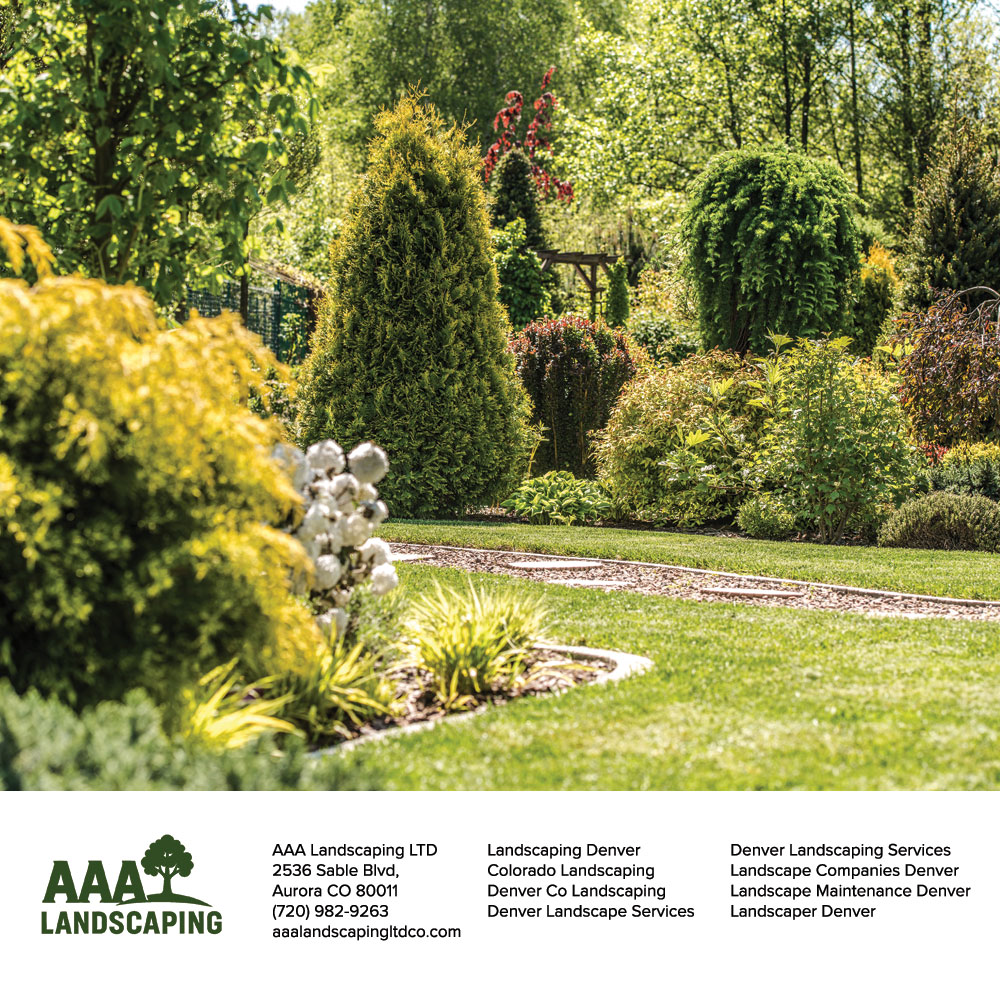
Pruning is an area where experience really matters. Bad pruning can ruin the natural form of shrubs and trees. The rounded “meatball” look may be common, but it is not always healthy or attractive. Some shrubs bloom on old wood, so pruning at the wrong time removes the flowers. Some trees should not be aggressively thinned. Some ornamental grasses look best if left standing through winter, while others flop and make a mess. A thoughtful maintenance crew knows the difference.
For homeowners who enjoy gardening, professional maintenance does not have to replace personal involvement. It can support it. Many people like planting containers, clipping herbs, or tending a small vegetable bed, but they do not want to aerate the lawn, troubleshoot irrigation zones, haul mulch, or prune a twenty-foot tree. The right arrangement keeps the enjoyable parts enjoyable.
What a good Denver landscape service actually brings to the table
Hiring help is not only about labor. It is about judgment. A strong landscape team notices details homeowners may not think to ask about until something goes wrong. They look at access for equipment, soil compaction, drainage patterns, irrigation pressure, plant exposure, long-term growth, and how the property is actually used.
A good provider of Denver landscape services AAA Landscaping or another established local company should be able to explain choices in normal language. You should not feel buried in jargon. If they recommend a certain paver, they should be able to tell you why. If they steer you away from a plant, they should explain the exposure, water demand, mature size, or maintenance issue behind that advice.
Here are a few signs you are talking with a contractor who understands the work:
- They ask how you use the space, not just what you want it to look like.
- They discuss drainage, soil, irrigation, and maintenance before talking only about finishes.
- They can explain what will change through the seasons and over the next few years.
- They provide a clear scope so you know what is included and what is not.
- They are honest about trade-offs, budget limits, and project timing.
That last point matters. Every landscape project has trade-offs. Natural stone may be beautiful but costly. Sod gives instant green but uses more water than many alternatives. Gravel mulch can look clean but may increase heat around some plants. A large shade tree is a long-term gift, but it needs space and establishment care. Honest guidance helps homeowners make decisions they will still like later.
The property value angle
Real estate professionals often talk about curb appeal because first impressions affect buyers. But property value is not just about selling. A well-built landscape improves daily life while you live there. It can add usable outdoor square footage, create privacy, reduce muddy problem areas, and make a home feel more finished.
A front yard with a clear walkway, healthy trees, clean beds, and balanced lighting changes how a house presents from the street. A backyard with a comfortable patio, shade, and thoughtful planting becomes an extra living area for dinners, morning coffee, kids’ play, or quiet evenings. These things matter even if you have no plans to move.
That said, not every landscape upgrade returns value equally. Overly personal features can narrow appeal. A huge water feature may delight one owner and worry the next. Elaborate planting beds may impress gardeners but intimidate buyers who want low maintenance. In Denver, water use is part of the value conversation too. A landscape that looks beautiful while using water wisely is easier to appreciate than one that feels expensive to keep alive.
Professional denver landscaping services can help aim improvements toward broad, lasting appeal. That often means investing in strong bones first: grading, hardscape, irrigation, trees, lighting, and durable plantings. Seasonal color and decorative touches can come after the foundation is right.
Low-water does not have to mean lifeless
Some homeowners hear “water-wise” and picture a yard full of rock with three lonely shrubs. Denver has plenty of those landscapes, and many of them are not especially attractive or functional. Rock alone is not design. In fact, too much rock can raise temperatures around a home, stress plants, and create glare.
Water-wise landscaping works best when it combines living plant material, thoughtful hydrozones, mulch choices, shade, soil improvement, and efficient irrigation. A smaller lawn can still be part of the plan if it serves a purpose. For example, a patch of turf for kids or dogs may make sense, while narrow strips along the side yard may not. Replacing unused turf with ornamental grasses, perennials, shrubs, and permeable paths can reduce water demand and make the space more interesting.
There is also a middle ground between a traditional lawn-heavy yard and a fully xeric landscape. Many Denver homeowners prefer a blended approach. They want some green, some pollinator-friendly plants, maybe a patio expansion, and less mowing. A good landscape designer can make that balance feel intentional rather than pieced together.
The best water-wise yards have seasonal movement. Spring blooms, summer texture, fall color, winter seed heads, evergreen structure, and attractive bark all play a part. They look alive because they are alive.
Lighting changes the entire experience
Outdoor lighting is often treated as an add-on, but it can transform a property. A few well-placed fixtures can make a front entry feel welcoming, help guests navigate steps, and highlight trees or stonework. In the backyard, lighting extends the hours you can use the space and gives the landscape depth after sunset.
Denver evenings are one of the pleasures of living here. Even after hot days, nights can be comfortable. A patio with soft lighting feels completely different from a dark slab outside the back door. The key is restraint. Too much lighting can feel harsh, bother neighbors, and wash out the night sky. Good landscape lighting usually uses lower intensity, warm color temperatures, and careful placement.
Path lights, downlights, step lights, and subtle uplighting all have their place. The goal is not to make the yard look like a hotel entrance. It is to create safety, shape, and atmosphere. This is another area where professional installation helps, especially with transformers, wiring, fixture quality, and long-term durability.
Drainage problems deserve respect
Water is sneaky. It follows grade, finds low spots, and exposes weak planning. In Denver, heavy summer storms can drop a lot of water quickly, even in a generally dry climate. Snowmelt can also create slow, repeated saturation near foundations, walkways, and shaded areas.
A soggy lawn corner might be a simple grading issue, or it might involve compacted soil, downspouts, neighboring runoff, irrigation leaks, or an old hardscape trapping water. The right fix depends on the cause. Sometimes the answer is regrading and extending downspouts. Sometimes it is a dry creek bed that actually carries water. Sometimes it is a French drain, though that term gets used casually and not every wet area needs one. Sometimes the answer is removing a low spot that should never have been planted with turf in the first place.
Good denver landscape contractors do not treat drainage as an afterthought. They watch how water enters and leaves the property. They consider where snow will pile up. They think about soil and slope. A beautiful landscape that sends water toward the foundation is not a successful landscape, no matter how good it looks in photos.

Choosing among Denver landscape companies
The Denver area has many contractors, from small crews to larger firms offering design, installation, and maintenance. There is no single right choice for every homeowner. The best fit depends on project size, budget, timeline, communication style, and whether you need ongoing care.
Some homeowners want a full-service partner such as AAA Landscaping or another established local team that can handle design, installation, and maintenance under one roof. Others may hire a specialized hardscape contractor for a patio, then use a gardener for planting. Both approaches can work if responsibilities are clear.
Before hiring, it helps to have a real conversation rather than simply collecting numbers. A bid is only useful if everyone is bidding on the same scope. One contractor may include soil amendment, drip irrigation, plant warranty, and cleanup. Another may leave those items out to keep the price low. That does not mean one is automatically wrong, but you need to know what you are comparing.

Ask practical questions. How will access be handled? Where will materials be staged? What happens if buried debris or bad soil is discovered? Who marks utilities? How are change orders handled? What maintenance does the finished project require? A reputable denver AAA landscaping company or any serious landscaper should welcome informed questions. Clear expectations make projects smoother for both sides.
The beauty of a landscape that fits your life
A stunning property is not always the fanciest one. It is the one that feels right for the home and the people who live there. For one family, that might mean a durable backyard with artificial turf, a paver patio, raised planters, and room for a dog to run. For another, it might be a quiet garden with native perennials, a flagstone path, and a small seating area under an ornamental tree. Someone else may want a clean, low-maintenance front yard that looks polished without demanding every Saturday morning.
This is where personal taste and professional guidance meet. A good landscape service should not force every yard into the same style. Denver has too much variety for that. The best results come from listening first, then shaping ideas to fit the site, budget, and long-term maintenance appetite.
It is worth being honest about how much care you want to provide. If you travel often, a thirsty garden full of fussy plants may become a burden. If you love working outside, more layered planting may be a joy. If you have young children, thorny shrubs near play areas are a bad idea. If you host often, patio circulation and lighting may matter more than an elaborate front bed. The landscape should support real life, not create a second job you never wanted.
Seasonal timing matters more than people think
Denver’s landscaping calendar has rhythms. Spring brings a rush of interest, but soil may still be cold, and late snow is always possible. Summer can be productive for hardscape work, though planting in extreme heat requires careful watering and plant handling. Fall is excellent for many plantings because temperatures cool while soil remains workable. Winter may slow planting, but it can be a good time to design, plan, and schedule before contractors are booked out.
The busiest landscape companies Denver homeowners call may schedule weeks or months ahead during peak season. Waiting until the first warm weekend to start planning a major project can mean missing the ideal window. If you want a backyard ready for summer, design conversations often need to start in winter or early spring. If you want fall planting, the planning should happen before fall arrives.
Weather can also affect installation. Hail, heavy rain, snow, and temperature swings are part of working in Colorado. A contractor who builds a realistic schedule and communicates delays is far better than one who promises perfect timing and disappears when conditions change.
When DIY makes sense and when it does not
There is nothing wrong with doing some landscape work yourself. Many homeowners can plant small beds, spread mulch, maintain containers, or refresh edging with good results. DIY can be satisfying, and it can save money on simple tasks.
The line usually appears when the project involves grading, drainage, irrigation, large trees, retaining walls, electrical work, gas lines, heavy materials, or expensive hardscape installation. Mistakes in those areas can cost more to fix than hiring correctly from the beginning. There is also the matter of tools and labor. Moving several tons of base material, compacting it properly, and setting pavers accurately is hard physical work. It is not impossible for a determined homeowner, but it is often more demanding than expected.
A hybrid approach can work well. Professionals can handle the infrastructure, layout, irrigation, trees, and hardscape, while the homeowner adds seasonal color or smaller perennials over time. That gives the property a strong foundation and still leaves room for personal touches.
A well-done landscape keeps giving back
The best landscapes do not shout for attention. They simply work. The front entry feels clear and welcoming. The lawn, if there is one, has a purpose. The beds have depth and seasonal interest. Water drains properly. The patio is sized for actual furniture. Trees are planted where they can mature. Irrigation supports the plants without wasting water. Maintenance feels manageable.
That kind of result rarely happens by accident, especially in Denver. Our climate rewards thoughtful choices and punishes guesswork. Professional landscaping Denver services bring local knowledge, practical skill, and a long view of how outdoor spaces change over time.
Whether you are considering a full redesign, a smaller refresh, ongoing landscape maintenance Denver support, or help from a trusted team like AAA Landscaping, the goal is the same: a property that looks beautiful and lives well. When the design fits the site and the work is done correctly, the yard becomes more than something to look at. It becomes part of the way you enjoy your home.
AAA Landscaping LTD
2536 Sable Blvd, Aurora, CO 80011
(720) 982-9263
https://www.aaalandscapingltdco.com/
https://www.instagram.com/aaa_landscapingcolorado